
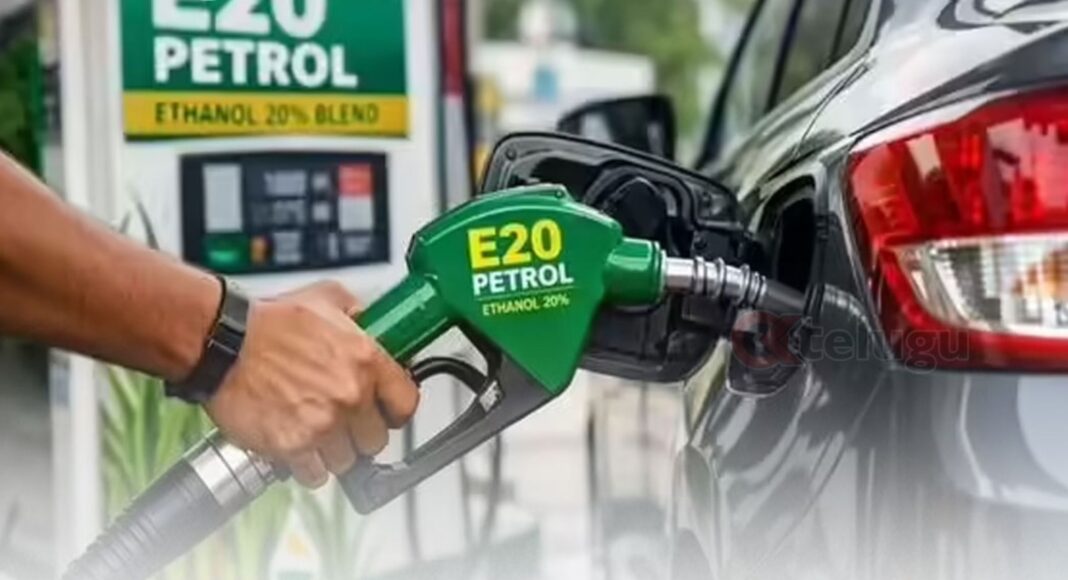
The Central Government has acknowledged that using E20 petrol (fuel blended with 20% ethanol) can lead to a slight reduction in mileage in some vehicles, addressing concerns raised by motorists over the past few months. However, the Ministry of Petroleum and Natural Gas clarified that while fuel efficiency may decrease marginally, E20 offers significant benefits such as improved engine performance and lower carbon emissions.
The clarification came through an official “Frequently Asked Questions (FAQs)” document released by the ministry. It also rejected claims that the rollout of E20 fuel was rushed, stating that the policy was introduced only after extensive scientific testing, consultations with automobile manufacturers, and a phased increase in domestic ethanol production. The ministry noted that India began ethanol blending through a pilot project in 2001, with blending levels increasing from 1.5% before 2014 to 10% by 2022, and gradually moving toward a 20% target during 2025–26.
The ministry also dismissed reports suggesting that E20 petrol damages vehicle engines or increases maintenance costs. According to the government, extensive real-world testing found no evidence of corrosion, engine damage, or component failures caused by E20 fuel in compatible vehicles. Automobile manufacturers, including Maruti Suzuki and Hero MotoCorp, have also supported these findings.
Highlighting the broader benefits of the ethanol blending programme, the government said it has helped India save ₹1.97 lakh crore in foreign exchange by reducing crude oil imports. It also claimed the programme has cut 31.6 million tonnes of crude oil imports and reduced 95.2 million tonnes of carbon emissions. Additionally, ethanol procurement has generated ₹1.66 lakh crore in income for farmers since 2014–15. The Centre urged the public not to believe misinformation regarding E20 petrol and reiterated that the fuel is safe for vehicles designed or approved to use it.
