
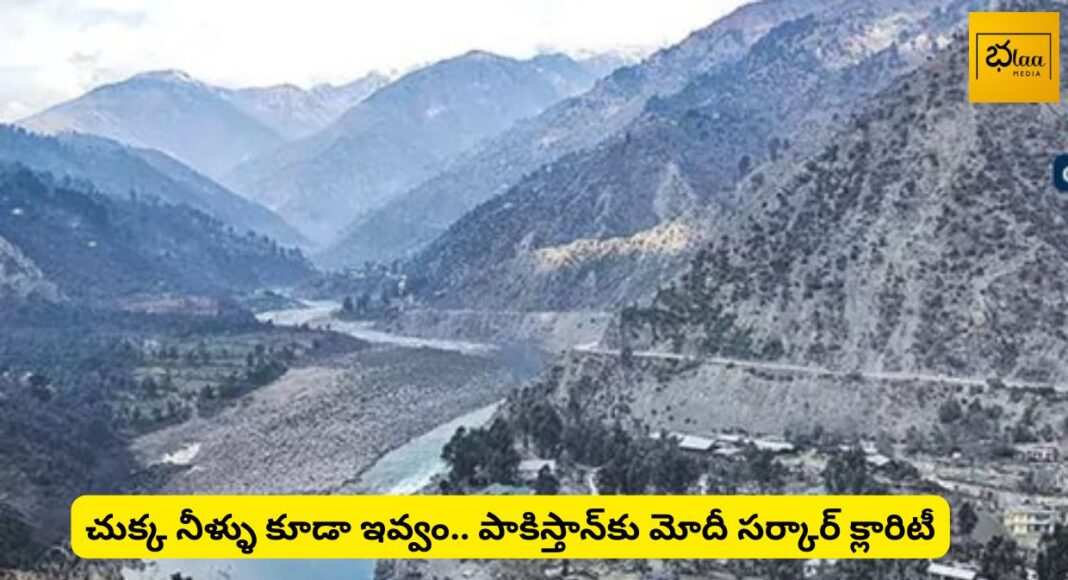
New Delhi: India has reiterated its firm position on the Indus Waters Treaty (IWT), stating that its policy towards Pakistan will remain unchanged until Islamabad takes credible and irreversible action against cross-border terrorism. The response came after Pakistani leaders criticized India’s decision to suspend cooperation under the treaty and urged New Delhi to restore the flow of water.
Responding to media queries, Ministry of External Affairs (MEA) spokesperson Randhir Jaiswal said India’s position on terrorism remains clear and consistent. He emphasized that Pakistan must end its support for cross-border terrorism before any meaningful progress can be made in bilateral relations. India has maintained that the treaty cannot function normally while terrorism continues to emanate from Pakistani territory.
Pakistan’s Minister Musadik Malik recently warned that any attempt to restrict Pakistan’s share of the Indus river system could have serious consequences. Another Pakistani minister, Attaullah Tarar, described water security as a matter of national importance and asserted that the 1960 Indus Waters Treaty, brokered by the World Bank, remains legally binding.
India, however, has maintained that the treaty was signed in an era of peace and good faith, and that Pakistan’s continued sponsorship of terrorism has fundamentally altered the circumstances under which the agreement has operated. New Delhi has repeatedly linked future engagement with Islamabad to concrete action against terrorist groups.
During the same briefing, the MEA also expressed concern over Pakistan’s military actions involving Afghanistan and reaffirmed India’s support for Afghanistan’s sovereignty and territorial integrity. Jaiswal said India would continue to engage with the Afghan people through humanitarian assistance and development projects.
The Indus Waters Treaty has remained one of the few agreements that survived decades of hostility between the two countries. However, following recent terrorist attacks and rising tensions, India has adopted a tougher stance, making the future of the water-sharing arrangement increasingly uncertain.
